Building and running Staffvertex, a multi-tenant time tracker.
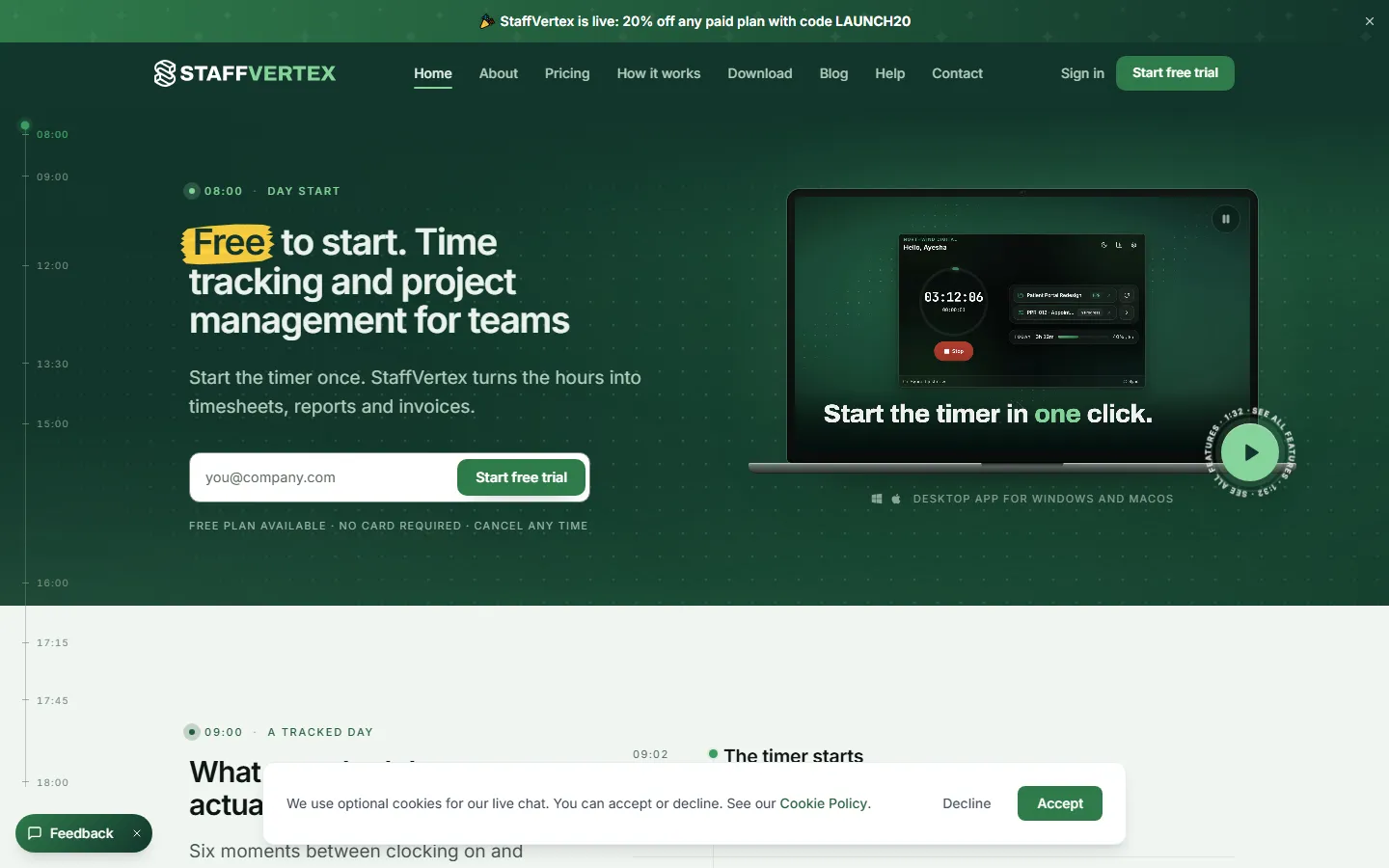
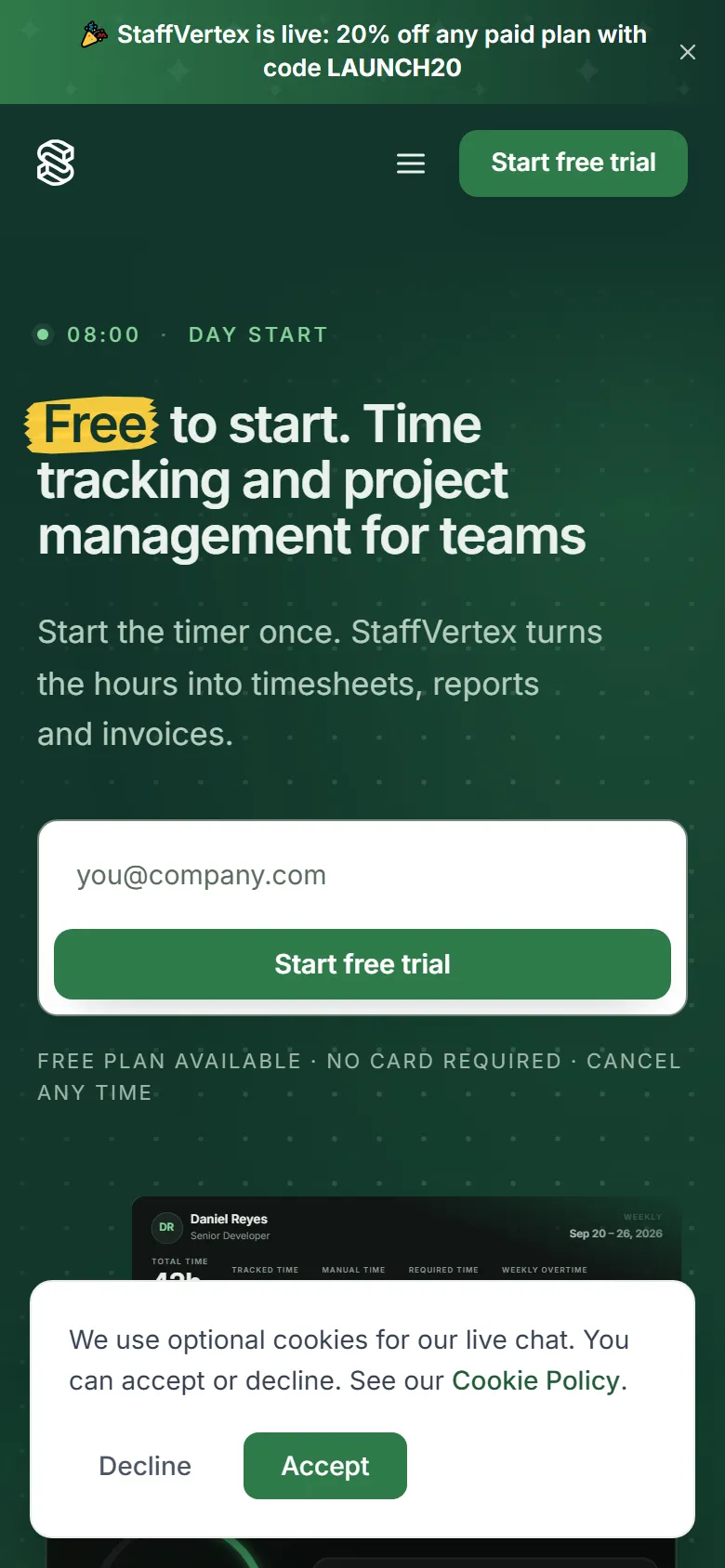
Time tracking and project management for teams that bill or pay by the hour. Tracked time turns into timesheets, reports and invoices. I build its backend APIs and web app, and own its maintenance and releases.
- Role
- Full-stack developer
- Company
- Alphinex Solutions
- Status
- Live, in active development
The problem
When a team pays or invoices by the hour, the hours have to be right. People forget to start timers, lose connection mid-task, log meetings after the fact and split time across projects. Every gap turns into a dispute on a timesheet or an invoice.
The product
People start a timer on the desktop app or in the browser. The tracked hours flow into projects, boards, timesheets, reports and invoices, with each team's workspace kept separate. A free plan covers one user; Pro and Business are per seat.
My contribution
- Built the backend APIs that record time, tasks and team data.
- Built the web interface teams use every day.
- Own maintenance end to end: bug fixes, improvements and releases.
What the platform does
Product capabilities, as shipped. My work is the API and web app that serve them; the desktop clients are a separate project.
- 01
Offline-safe timer
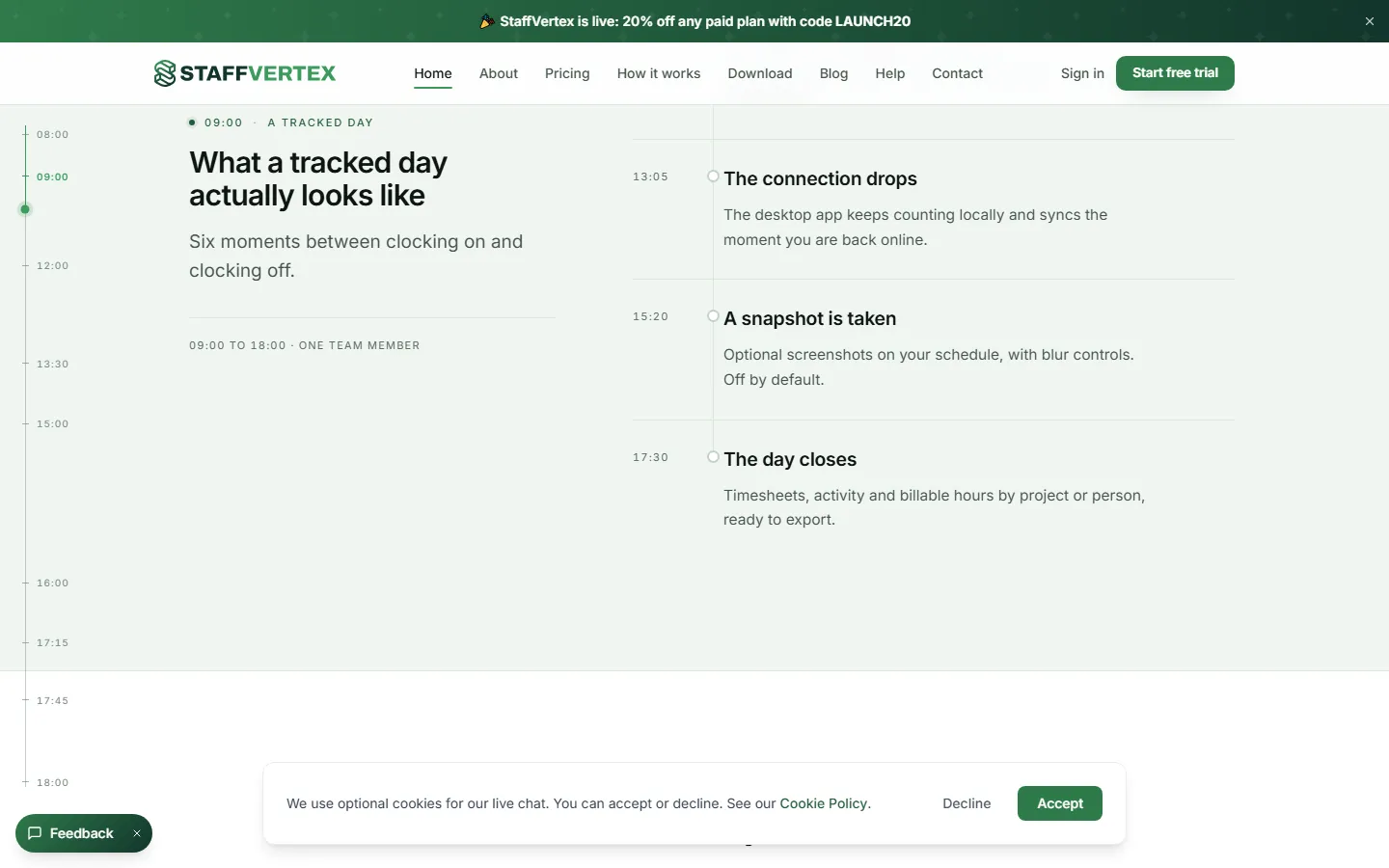
Desktop timer for Windows and macOS keeps counting when Wi-Fi drops and syncs when it returns.
- 02
Idle-time policies
Each team decides whether idle time is kept, discarded or asked about.
- 03
Privacy-first screenshots
Optional, off by default, with blur controls.
- 04
Projects & boards
Tasks, dependencies and deadlines alongside the timer.
- 05
Timesheets to invoices
Overtime, exportable reports, invoices and pay rates.
- 06
Per-seat plans
Free for one user, then Pro and Business per seat.
A data model that survives people editing their time.
A time tracker is really three apps sharing one API: the web app for planning and reports, the desktop app that tracks, and the API with its database in the middle. The web app runs on Next.js, which also server-renders the public marketing and pricing pages so they rank.
Read the full write-up →- 01
Store intervals, not totals
Each entry has start, end, user, project and task in UTC. Durations are calculated, never the only record.
- 02
Record the source and keep edit history
Desktop, web or manual, plus the old values on every change. It settles disputes and catches bugs.
- 03
Index for the questions asked most
User + start time covers "my week"; project + start time covers project reports.
- 04
Day boundaries in the user's time zone
Midnight where the person is, not midnight on the server.
Outcome
Staffvertex is live and in active development, with public sign-up, a free plan and paid per-seat tiers. I continue to ship its fixes and features.
Building a SaaS product?
I can take it from data model to deployed product, or step into an existing codebase and keep it shipping.
Need something like this?