Ecommerce · · 5 min read
How to Build a Furniture Ecommerce Website in Pakistan
Furniture is one of the hardest things to sell online: expensive, bulky and bought on trust. Here's how I'd plan a furniture store for Pakistani buyers, based on building Timbera.pk.
 Osama KhattakFull Stack Developer · Published
ON THIS PAGE · 8 SECTIONS
A sofa can cost more than a phone, it takes two people to carry, and nobody wants to send one back. That's why furniture is one of the hardest categories to sell online. Buyers need far more reassurance than they do for a t-shirt, and the website has to give it to them.
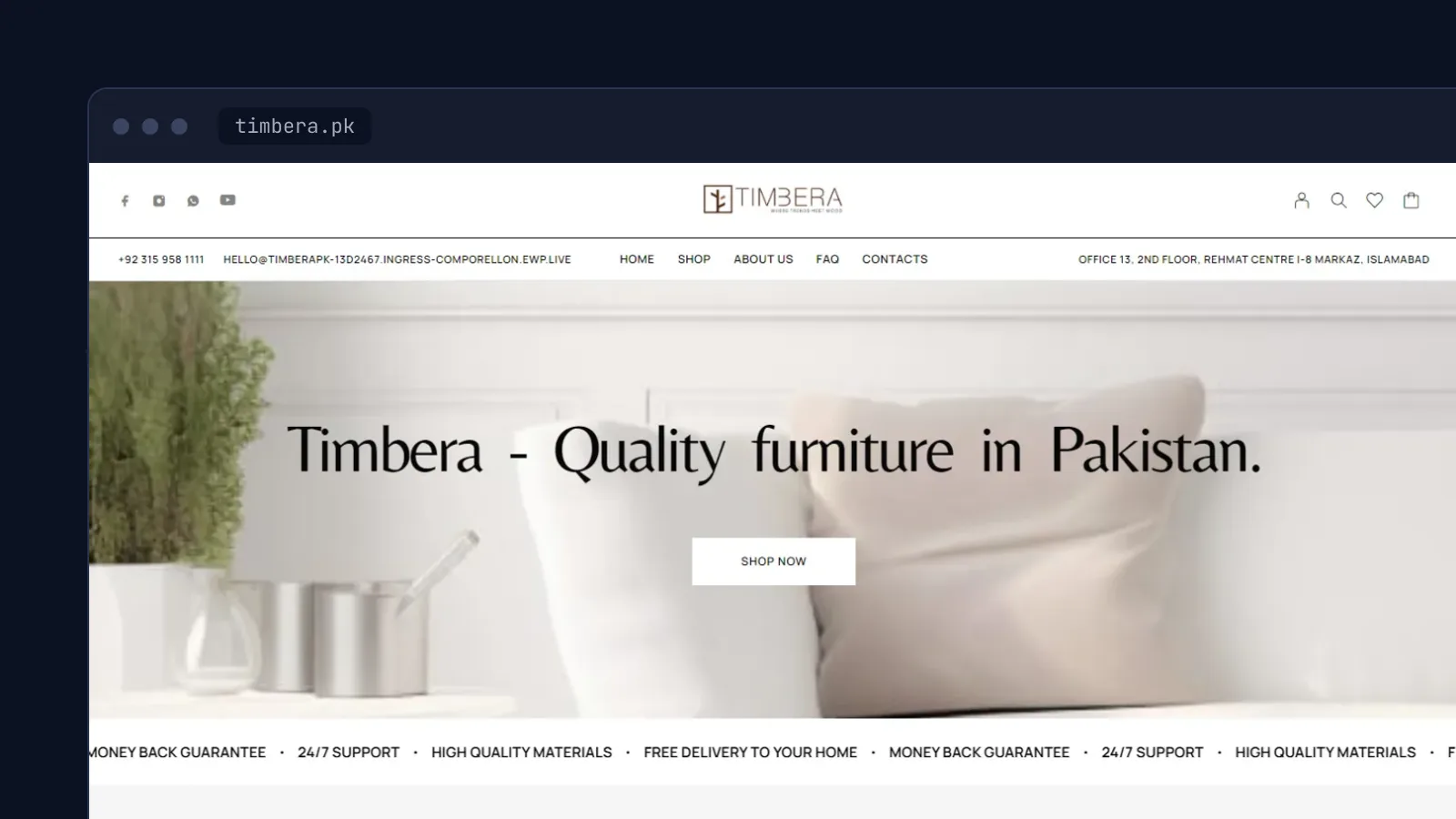
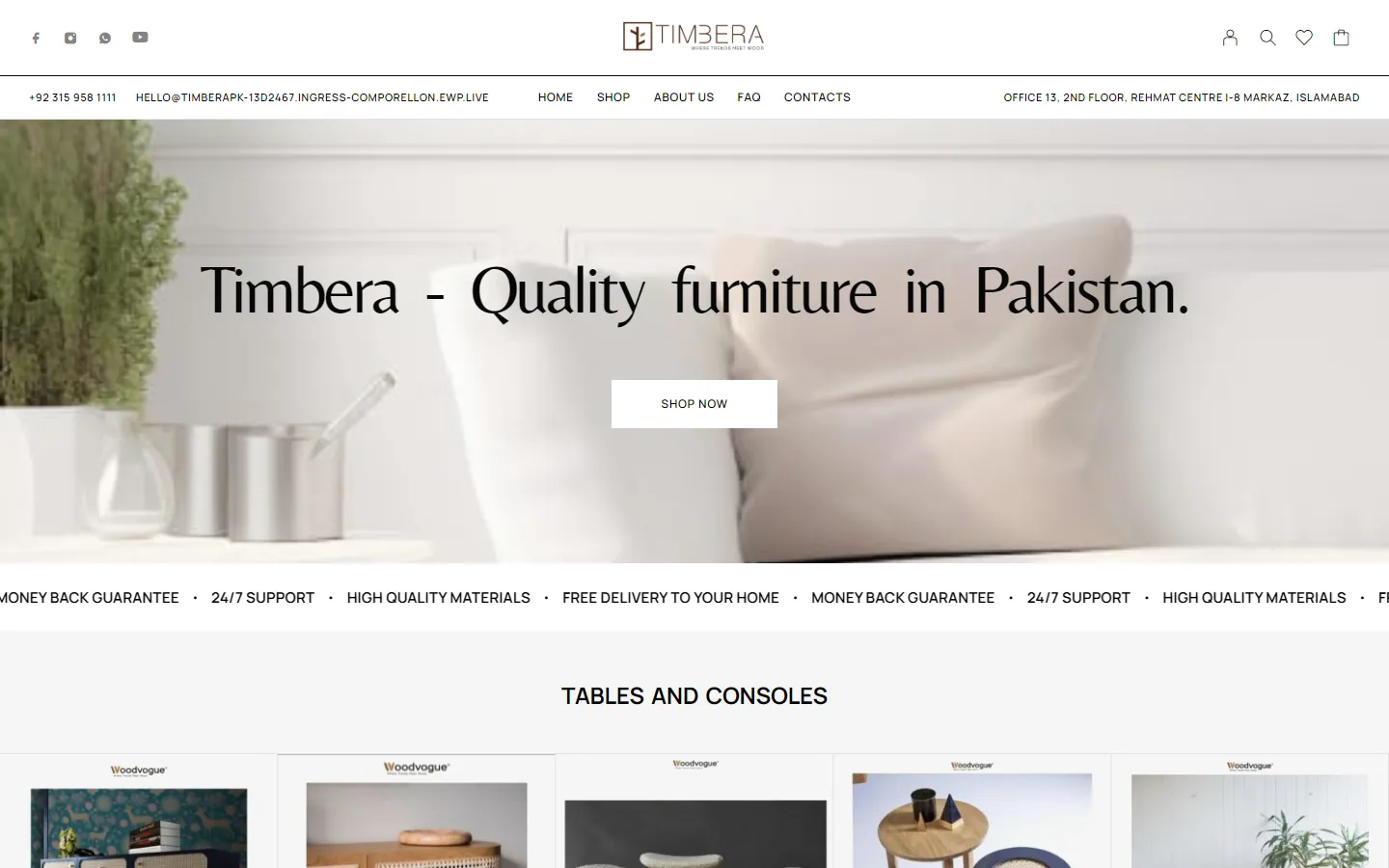
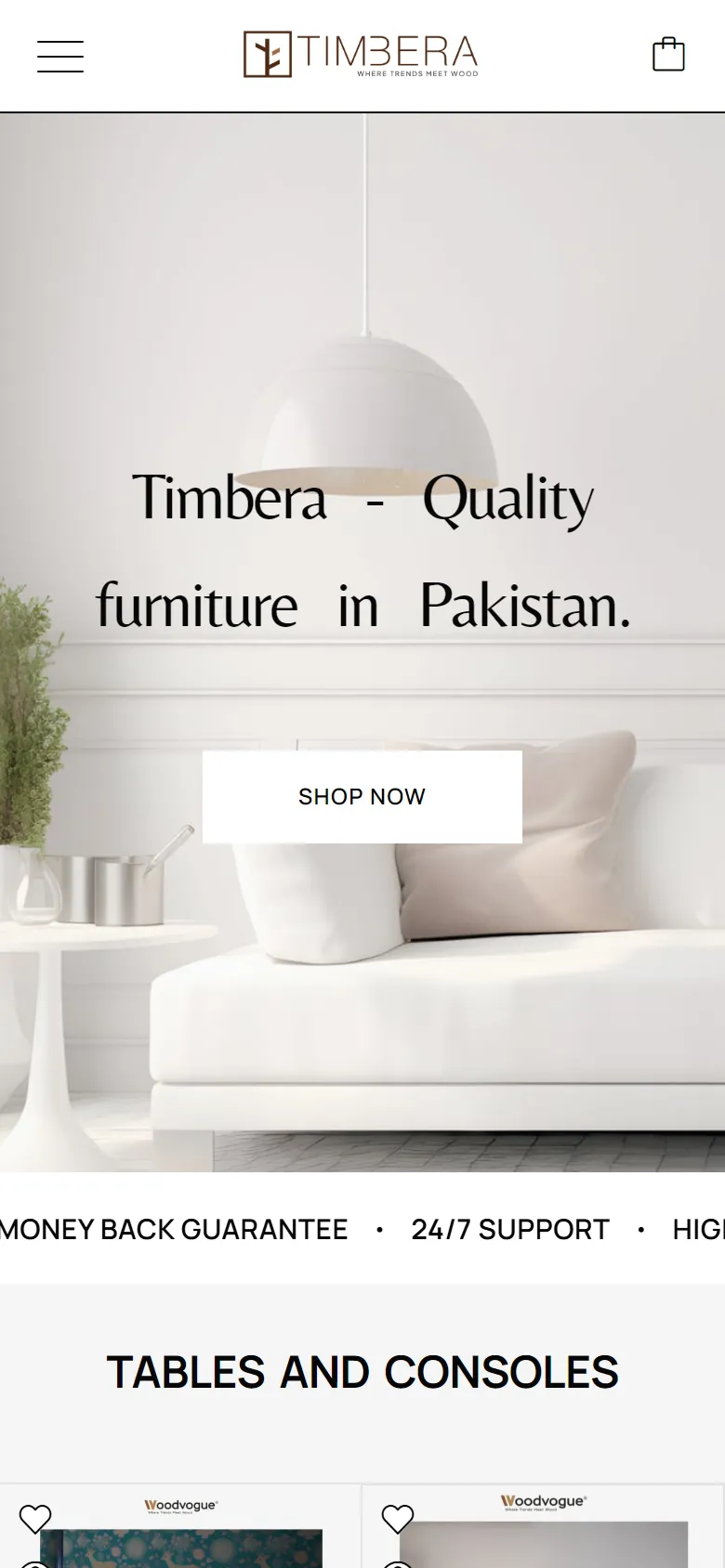
I built Timbera.pk, an online furniture store based in Islamabad, on WordPress and WooCommerce. This guide is how I'd plan a furniture ecommerce website for buyers in Pakistan today, from choosing the platform to the checks I run before launch.
Why furniture is different online
Three things set furniture apart from most ecommerce:
- High price, low frequency. People buy a bed every few years. They research for longer, compare more, and often visit the site several times before ordering.
- It has to fit. Dimensions matter as much as looks. A dining table that is 10 cm too long for the room is a return, and returns of bulky items are expensive.
- Delivery is part of the product. Buyers want to know when it arrives, whether it comes assembled, and who carries it up the stairs.
Every page on the site should answer at least one of those worries.
Choosing a platform: WooCommerce or Shopify
Timbera runs on WordPress with WooCommerce, with Elementor for page layouts. For a Pakistani furniture business, that combination has real advantages:
- No monthly platform fee and no transaction fee from the platform itself.
- A wide choice of local payment and courier plugins.
- Full control over product attributes, which you need for filters such as fabric and colour.
- WordPress for content, so buying guides and room ideas live on the same domain as the shop.
Shopify is faster to start and needs less maintenance. The catch for Pakistan is payments: Shopify's own payment service isn't offered in Pakistan, so you depend on third-party gateways and pay Shopify's extra fee on top. If you choose WooCommerce, budget for hosting, backups and plugin updates instead. If you want help choosing or building, that's exactly what my WordPress development service covers.
Payments that work in Pakistan
Most stores here end up offering a mix:
- Cash on delivery. Still expected by many buyers. For expensive pieces, consider asking for a deposit before dispatch, and say so clearly on the product page rather than at checkout.
- Mobile wallets. JazzCash and Easypaisa are widely used and both offer online merchant payments that can be connected to WooCommerce.
- Cards and bank transfer. Through a local payment gateway or your bank. Bank transfer with a screenshot of the receipt is common for big orders.
Structure the catalogue around how people shop
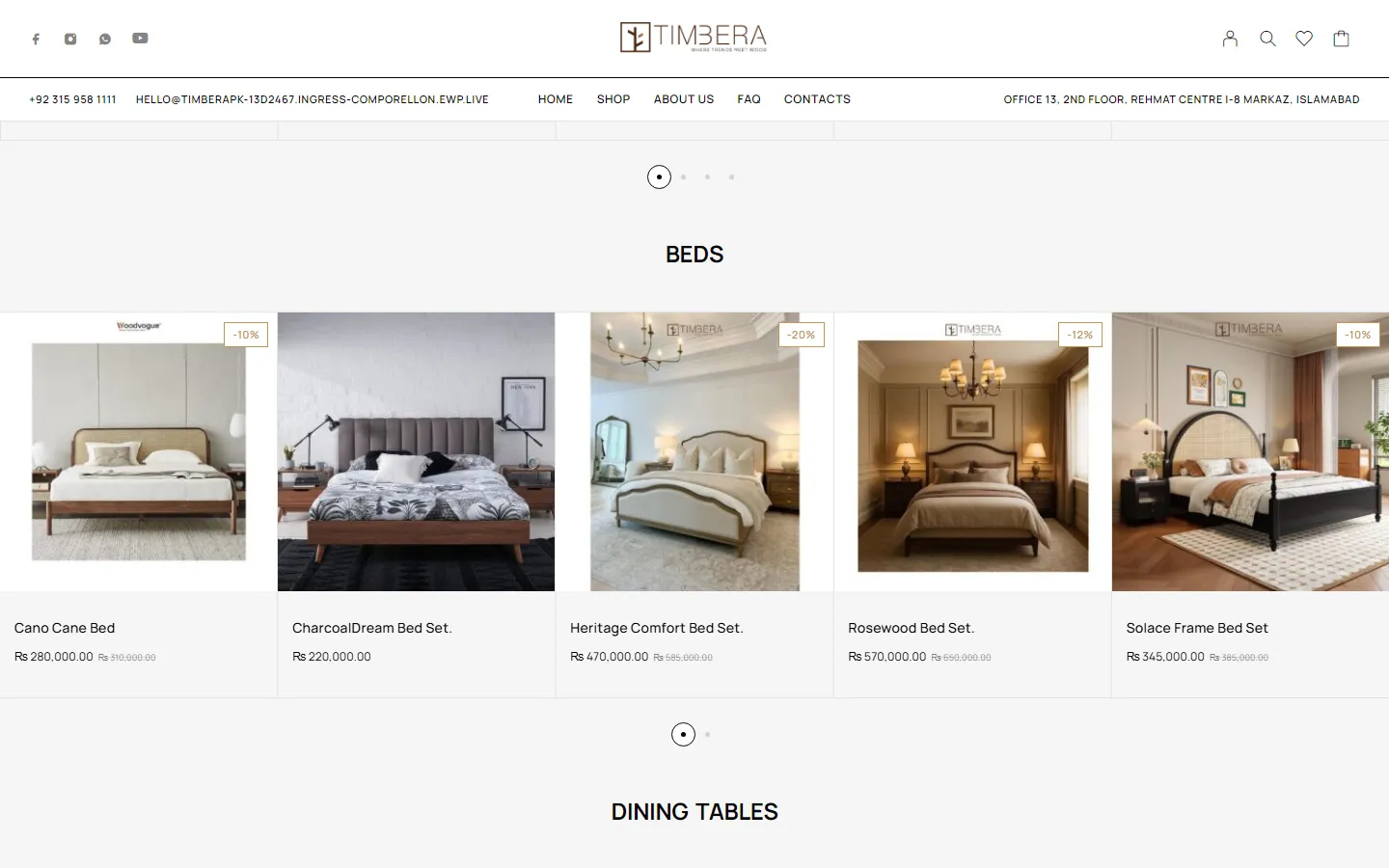
People shop for furniture by room and by type: "sofas", "beds", "dining tables". Timbera's categories follow that: sofas, beds, dining tables, chairs, tables and consoles, mirrors, and book racks and shelves. Keep the top level short and obvious.
Then use product attributes, not more categories, for the things people filter by. Timbera's shop filters by price, colour and fabric. Set attributes up properly in WooCommerce from the first product. Adding them to 80 products later is slow, manual work.
Product pages that answer the real questions
A furniture product page needs more than a photo and a price. Before someone pays, they want to know:
- Exact dimensions in centimetres or inches: width, depth, height, and seat height for chairs and sofas.
- Materials, written plainly: solid wood or engineered board, which wood, which fabric.
- Delivery time and cost for their city, not hidden until checkout.
- Assembly: does it arrive assembled, and if not, who does it.
- Care and warranty, plus what happens if it arrives damaged.
Photos come next. Show the piece from several angles, one close-up of the material, and one photo in a real room for scale. Use the same background and lighting across the catalogue, because a consistent catalogue looks like a business that can be trusted with a large order.
Keep it fast on a phone
Most furniture browsing in Pakistan starts on a phone, often on mobile data. Large product photos make that the biggest risk to a furniture store's speed. The fixes are well known:
- Serve images as WebP, sized for the slot they appear in, and lazy-load everything below the first screen.
- Use page caching, and a CDN in front of the site.
- Keep the plugin list short. Each plugin adds scripts to every page, including the ones that don't use it.
- Test on a mid-range Android phone, not only on your laptop.
SEO for a furniture store
Category pages are where a furniture store wins search traffic. Someone searching "sofa set price in Pakistan" wants a page of sofas, not one sofa. So give each category page a short, useful introduction, a descriptive title and a clean URL such as /product-category/sofas/.
- Write your own product descriptions. Copying the supplier's text gives Google nothing new to rank.
- Add Product structured data with price and availability so search results can show them.
- Name image files and write alt text that describes the piece: "walnut king size bed with upholstered headboard".
- Publish buying guides, such as how to choose a sofa size for your lounge, and link them to the right categories.
If you already have a store that isn't getting found, my SEO service starts with exactly these checks.
A launch checklist
Before announcing the store, I go through this list:
- Every page has your own business name, address and policies. Search the whole site for any text left over from the theme's demo content.
- Shipping, returns and payment policies are written for Pakistan, in plain language.
- Every button and link points to the live domain, not a staging copy.
- Test orders with each payment method, on a phone.
- Order emails reach the customer and the shop, and don't land in spam.
- Google Search Console and analytics are set up, and the sitemap is submitted.
A furniture website is never really finished. New collections arrive, prices change, and seasonal sales come and go. Build it so the owner can manage all of that without a developer, and keep the developer for the things that matter: speed, payments and search.
Planning a store of your own? See Timbera.pk live, read the Timbera case study, or send me the details of your project.
Written by Osama Khattak
Full-stack developer at Alphinex Solutions, building Staffvertex. I take on freelance projects and I'm open to full-time remote roles. More about me
Questions about this topic
Is WooCommerce or Shopify better for a furniture store in Pakistan?
Both can work. WooCommerce gives you full control and a wide choice of Pakistani payment plugins with no monthly platform fee. Shopify is quicker to start but its own payment service isn't offered in Pakistan, so you depend on third-party gateways.
How much does a furniture ecommerce website cost in Pakistan?
It depends on the number of products, custom design and integrations. A store built on a good theme costs far less than a fully custom design. Ask for a fixed quote based on a written list of pages and features.
Should a furniture store offer cash on delivery?
For most Pakistani stores, yes. Many buyers expect it. For high-value items, an advance payment or partial deposit before dispatch reduces the risk of refused deliveries.